Taste & Experience

Virginia Food, Wine & Culture

From the blue crabs of the Chesapeake and the salt-cured hams of the Piedmont to the world-class wineries of the Blue Ridge foothills and the electrifying arts scenes of Richmond and Charlottesville — Virginia's cultural life is as rich and layered as its history.

The Soul of Virginia — Food, Wine, and Living Culture

Virginia's cultural identity is shaped by layers of history that extend back ten millennia before European contact. The Indigenous peoples of the Powhatan Confederacy, the Monacan Nation, and dozens of other tribal communities developed sophisticated agricultural systems, trade networks, and culinary traditions that profoundly influenced the food culture of the colonial settlers who arrived in the early 17th century. Those settlers, in turn, brought English foodways that were transformed over the following three centuries by the agricultural genius and culinary creativity of the hundreds of thousands of enslaved African Americans whose labor built Virginia's farms, plantations, and estates. The result is a food culture of extraordinary richness, complexity, and historical depth that rewards serious exploration.

Virginia's contemporary cultural life is equally rich and far more surprising than most visitors expect. Richmond, Charlottesville, and the Northern Virginia suburbs of Washington D.C. each support thriving arts communities — visual arts, performing arts, independent music, film, and literature — that operate at genuinely national and international levels of quality. The state's festivals, from the Virginia Wine Festival to the Virginia Film Festival to the Carter Family Fold's weekly mountain music programmes, offer visitors windows into cultural traditions both longstanding and brand new.

Spread of traditional Virginia cuisine including crab cakes, peanut soup, Virginia ham, and fresh oysters on rustic wooden table
Culinary Tradition

Virginia's Extraordinary Culinary Heritage

Virginia cuisine is one of the most historically significant and culinarily distinctive regional food traditions in the United States. It is, in many respects, the origin point of American Southern cooking — a culinary tradition that emerged from the encounter of English, African, and Indigenous foodways in the tobacco fields and plantation kitchens of the 17th and 18th centuries and that continued to evolve through the Civil War era, the hardships of Reconstruction, the Great Migration, and the farm-to-table revolution of the late 20th century.

The most iconic element of Virginia's culinary identity is its pork tradition — specifically, the extraordinary Virginia country ham, which has been cured, smoked, and aged in the Piedmont and Southside counties of the state for more than three centuries. The process of making a proper Virginia country ham is a lengthy and meticulous one: fresh hams are packed in salt and cured for up to five weeks, then rinsed, coated in black pepper and saltpeter, cold-smoked over a mixture of hickory, apple, and oak for an extended period, and finally aged for six months to two years in specialized aging houses that allow the slow biochemical transformations that develop the ham's characteristic intense flavour. The result is a product of remarkable complexity — salty, sweet, nutty, and deeply umami — that compares favorably to the finest jamón ibérico or prosciutto di Parma.

Virginia peanuts, cultivated in the sandy soils of the Southside counties along the North Carolina border since the mid-19th century, are another pillar of the state's culinary identity. The area around Emporia, Franklin, and Suffolk is still one of the most productive peanut-growing regions in the United States. Peanut soup, a traditional Virginia dish thought to derive from West African culinary traditions brought by enslaved people, remains a beloved regional staple — a smooth, rich, golden bisque that appears on the menus of the finest Virginia restaurants alongside the most casual country diners. The Peanut Festival in Emporia each autumn celebrates this heritage with competitions, demonstrations, and an extraordinary variety of peanut-based foods that would surprise even the most seasoned food traveler.

  • Virginia country ham — one of America's greatest artisanal food products
  • Chesapeake blue crab — a cultural institution and culinary treasure
  • Virginia peanuts and peanut soup — a West African heritage in every bowl
  • Eastern Shore oysters — world-class bivalves from pristine tidal waters

The Chesapeake Table — Seafood of the Old Dominion

The Chesapeake Bay and its tributaries have fed the people of Virginia for millennia, and the seafood they produce remains one of the great culinary treasures of the Eastern Seaboard. The Chesapeake blue crab — Callinectes sapidus, "the savory beautiful swimmer" — is perhaps the bay's most iconic product: a crustacean of extraordinary flavour and cultural significance that has been harvested from the Chesapeake's waters by Algonquian peoples, colonial settlers, and generations of Chesapeake watermen in an unbroken tradition stretching back thousands of years.

Eating blue crab in Virginia is as much ritual as it is meal. The soft-shell crab season, when crabs have just shed their hard shells and the entire animal can be eaten — pan-fried, sautéed, or served on a sandwich — is one of the great anticipatory events of the Virginia culinary calendar, eagerly awaited each spring. Hard crabs, steamed in a blend of Old Bay seasoning and beer and dumped on a newspaper-covered table for communal cracking, is a summer institution. Crab cakes — and the question of who makes the best ones, and what exactly should and should not go into them, is one of the most contentiously debated culinary questions in the entire Chesapeake region — appear on virtually every seafood restaurant menu in the state.

The Eastern Shore oyster harvest is another jewel of Virginia's seafood culture. The cold, clean tidal waters of the lower Chesapeake Bay produce oysters of remarkable quality and varied character — from the briny, full-flavoured Lynnhavens (an 18th-century variety revived by contemporary aquaculturists) to the delicate, sweet Rappahannock Rivers and the bold, mineral-laden Moraticos. Virginia is now one of the most dynamic oyster-producing states in the country, with a thriving aquaculture industry that has helped rehabilitate the bay's water quality while producing world-class shellfish that appear on the menus of the finest restaurants from New York to San Francisco.

"The Chesapeake oyster is not merely food — it is a filter for the bay's soul, and eating one is an act of communion with the living waters of Virginia."

Golden rows of Virginia wine country grapevines with Blue Ridge Mountains at sunset
Virginia Wine

Virginia Wine Country — A Revelation in Every Glass

Virginia's transformation into one of America's most exciting wine regions is one of the most remarkable stories in American viticulture. Thomas Jefferson, who spent years attempting to grow European wine grapes at Monticello with only frustrating failure to show for it — the phylloxera louse and various fungal diseases defeated his every effort — would be astonished to find that his beloved Virginia hills are now home to more than 300 wineries producing wines of genuine distinction and international recognition. The Monticello American Viticultural Area (AVA), centered in the rolling foothills west of Charlottesville, is Virginia's premier wine region, with a concentration of outstanding producers whose Viognier, Cabernet Franc, Petit Verdot, and Petit Manseng regularly earn scores in the 90s from Wine Spectator and Wine Advocate.

Virginia's wine renaissance began in earnest in the 1970s and 1980s, when pioneering producers like Barboursville Vineyards — established by the Zonin family of Veneto, Italy, and still one of the state's finest producers — and Meredyth Vineyard demonstrated that world-class wine was possible in the Virginia hills. The key discovery was that Virginia's climate, with its hot summers, cool nights, and well-drained red clay soils, was particularly well-suited to the aromatic white varieties and bold red Bordeaux varieties that had always eluded Jefferson's less scientific planting experiments. Viognier, the fragrant white grape of France's Northern Rhône Valley, has become Virginia's signature varietal, producing wines of extraordinary floral intensity and complexity in the Monticello AVA.

Beyond Charlottesville, Virginia's wine regions extend throughout the state. The Northern Shenandoah Valley, anchored by wineries near Winchester and Front Royal, produces excellent riesling and chardonnay from cool-climate vineyards in the valley floor. The Northern Neck and Eastern Shore have developed a handful of outstanding small producers. The Richmond metro area and the Williamsburg region each support a growing cluster of wineries that have developed strong local followings. Virginia's cider industry, built on the state's extraordinary heritage of heirloom apple varieties — many of which are grown nowhere else in the world — has also emerged as a significant sector, with producers in the Shenandoah Valley crafting dry, complex ciders that rival the finest products of England's West Country and France's Normandy.

  • 300+ wineries statewide — Virginia is the 5th largest wine-producing state by vineyard acreage
  • Viognier is Virginia's signature white grape — try it at any Monticello AVA winery
  • Barboursville Vineyards, King Family Vineyards, and Michael Shaps Wineworks are essential stops
  • The Monticello Wine Trail includes 40+ wineries within easy driving distance of Charlottesville
Wine Tourism

Visiting Virginia's Wineries — A Traveler's Guide

Wine touring in Virginia is one of the most pleasurable and reward-rich travel experiences the state offers. Unlike the sometimes corporate, high-volume tasting rooms of California's most famous wine regions, Virginia's wineries are typically family-owned operations where the winemaker or proprietor is often personally present, where the tasting room reflects the owner's personality and values, and where the connection to the land is palpable and genuine. Many Virginia wineries also produce their own food — charcuterie boards featuring local Virginia ham and cheeses, wood-fired pizzas, farm-fresh salads — making a full afternoon at a single winery a deeply satisfying experience of place and palate.

The pastoral setting of Virginia's wine country adds immeasurably to the experience. The vineyards of the Monticello AVA are set against the magnificent backdrop of the Blue Ridge Mountains, and many winery terraces offer views of the valley that are genuinely breathtaking in any season. In spring, the vineyards bloom with wildflowers and the mountains are stippled with the fresh green of new growth. In summer, the vine canopies create a lush, verdant landscape punctuated by the growing clusters of fruit. In autumn, the harvest transforms the vineyards into a riot of gold and russet. In winter, the stark geometry of the dormant vines against the snow-capped mountains has its own austere beauty.

A note for responsible wine touring: plan your itinerary to visit no more than three wineries in a day (most Virginia wineries recommend a similar limit), designate a driver, or book a guided tour that includes transportation. Several excellent tour operators in Charlottesville offer half-day and full-day vineyard experiences with knowledgeable guides, comfortable vehicles, and pre-arranged tasting appointments that often include access to library wines and behind-the-scenes cellar tours not available to walk-in visitors.

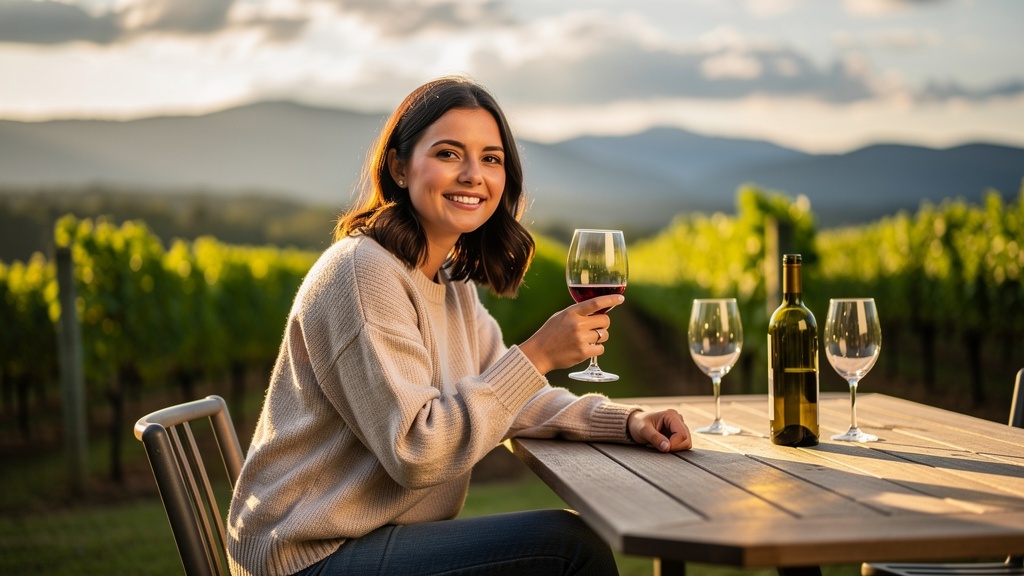
Young dark-haired woman enjoying red wine at an outdoor Virginia winery table with vineyard and mountain views

Virginia's Vibrant Arts & Cultural Scene

Colorful outdoor Virginia arts festival with artisan booths and community gathering in historic brick downtown

Virginia's arts and cultural scene is far richer and more diverse than most visitors anticipate — a reflection of the state's deep historical roots, its large and educated university population, its proximity to the arts infrastructure of Washington D.C., and the independent creative spirit that has always characterized the Commonwealth's people.

The Virginia Museum of Fine Arts (VMFA) in Richmond is the anchor of the state's visual arts world. One of the largest art museums in the southeastern United States, the VMFA houses a permanent collection of more than 50,000 works representing 5,000 years of human creativity. Its particular strengths include one of the finest collections of Art Nouveau and Art Deco decorative arts in the world, an outstanding collection of Himalayan art gifted by collector Sydney and Frances Lewis, important holdings in American painting and sculpture, and a significant collection of English silver. The museum is free for permanent collection admission and operates a popular rooftop café and a full restaurant. It is open seven days a week and houses one of Virginia's most distinctive museum shops.

Richmond's broader arts scene has exploded in vitality and national recognition over the past decade. The Institute for Contemporary Art (ICA) at VCU, designed by architect Steven Holl and opened in 2018, presents some of the most ambitious and challenging contemporary art exhibitions on the East Coast. The Quirk Gallery in Carytown represents a stable of outstanding Virginia artists working across all media. The 1708 Gallery in Richmond's arts district is one of the longest-running artist-run galleries in the United States, celebrating its 50th anniversary with programming that reflects its extraordinary history of supporting experimental and emerging art. The city's street art scene — particularly in the areas around the Virginia Museum of Fine Arts and the Manchester neighborhood — has earned Richmond a reputation as one of the great mural cities of the country.

  • VMFA — free admission to permanent collection, 50,000+ works
  • ICA at VCU — cutting-edge contemporary art in a Steven Holl masterpiece
  • Richmond's street art — nationally recognized outdoor gallery experience
  • Charlottesville's IX Art Park — community arts venue and creative hub

African American Heritage in Virginia

No understanding of Virginia's culture is complete without engaging deeply with the African American heritage that has shaped every aspect of the Commonwealth's history, from its earliest colonial decades to the present day. Virginia was the entry point for the first enslaved Africans brought to English North America — the 20 or so individuals who arrived at Point Comfort (now Fort Monroe) in 1619 aboard a ship flying a Dutch flag — and the state's subsequent history cannot be disentangled from the institution of chattel slavery and the resistance to it that culminated in the Civil War.

The Smithsonian National Museum of African American History and Culture, located in Washington D.C. and easily accessible from Northern Virginia, is the pre-eminent institution for understanding this history in all its dimensions. But Virginia itself offers extraordinary sites of African American heritage that are essential visits. Fort Monroe National Monument in Hampton, where the first enslaved Africans arrived in 1619 and where thousands of freedom-seekers took refuge during the Civil War, offers a profound and moving encounter with the foundational moments of African American history. The Black History Museum and Cultural Center of Virginia in Richmond documents the African American experience in the state from 1619 to the present with scholarly rigor and emotional depth.

The Maggie Lena Walker National Historic Site in Richmond honors the extraordinary life of Walker, who in 1903 became the first woman of any race to charter and serve as president of a bank in the United States — the St. Luke Penny Savings Bank, established to serve Richmond's African American community. Walker's home, preserved in the Jackson Ward neighborhood known as the "Harlem of the South" for its extraordinary concentration of African American business and cultural life in the early 20th century, is open for free tours and provides an inspiring counternarrative to the familiar story of African American suffering and oppression under Jim Crow.

The Virginia Civil Rights Memorial on Capitol Square in Richmond honors the courageous African American students, clergy, and community leaders who led the sit-ins, marches, and legal battles that dismantled Virginia's system of racial segregation. Booker T. Washington's birthplace in Franklin County, the Carter G. Woodson birthplace in New Canton (Woodson was the founder of Black History Month), and the African American Heritage Trail maintained by the Virginia Tourism Corporation together map a geography of Black achievement, resistance, and creativity that is as compelling as any heritage trail in the United States.

Virginia's Best Annual Festivals & Events

📚 Virginia Festival of the Book

Held each March in Charlottesville, the Virginia Festival of the Book is one of the premier literary festivals in the United States and a celebration of reading, writing, and intellectual life that perfectly suits the town that houses the University of Virginia. More than 400 authors participate over five days in readings, panels, conversations, and workshops held in university halls, bookshops, theatres, and outdoor venues throughout Charlottesville. The festival is free to attend — a remarkable expression of the democratic access to literary culture that Thomas Jefferson would surely have approved.

🍷 Virginia Wine Festival

The Virginia Wine Festival, held annually each October at the Clarke County fairgrounds near Berryville in the Shenandoah Valley foothills, brings together more than 80 Virginia wineries for a weekend-long celebration of the state's extraordinary viticultural achievement. Live music, artisan food vendors, cooking demonstrations, winemaker talks, and an extensive outdoor tasting area make this one of the finest regional wine festivals in the eastern United States. The autumn setting, with the Blue Ridge glowing in fall colour behind the fairgrounds, provides a backdrop of stunning natural beauty.

🎭 Virginia Film Festival

The Virginia Film Festival, founded in 1988 and held each November in Charlottesville, is one of the oldest and most respected film festivals in the United States. The festival presents a curated selection of American independent, international, and documentary films, often world or East Coast premieres, accompanied by Q&A sessions with directors, producers, and actors. The intimate scale of the festival — held primarily at the Paramount Theater and university venues — creates a cinematic community atmosphere that larger, more celebrity-focused festivals have entirely lost. Past guests have included directors John Sayles, Sidney Pollack, and Werner Herzog.

🎸 Floyd Fest

FloydFest, held each July in the scenic Blue Ridge Highlands near the town of Floyd in southwestern Virginia, is one of the premier American roots and world music festivals outside the major cities — a five-day celebration of bluegrass, Americana, folk, international, and eclectic music held on a beautiful hilltop farm with stunning mountain views in every direction. The festival draws artists of genuine international stature alongside emerging regional talent, and its community-oriented, sustainability-focused ethos reflects the independent mountain culture of the surrounding region. Floyd itself, a tiny town of 400 people with a disproportionate number of excellent restaurants and musical venues, is worth the trip alone.

🌊 Neptune Festival

The Neptune Festival in Virginia Beach each September is the largest annual event in the city and one of the largest beach festivals on the East Coast. The festival's sand sculpting competition, which draws world-class sand sculptors to create monumental works of art from Virginia Beach's fine-grained sand, is widely considered the finest competition of its kind in the United States. Live music concerts, an outdoor fine arts show, the Boardwalk 5K run, the King Neptune coronation ceremony, and an extraordinary collection of food vendors serve the hundreds of thousands of visitors who descend on the oceanfront for what amounts to a full week of celebration and community gathering.

🌸 Shenandoah Apple Blossom Festival

The Shenandoah Apple Blossom Festival in Winchester, held each May since 1924, is one of Virginia's oldest and most beloved annual events. The apple orchards of the Shenandoah Valley burst into blossom each spring, and the festival celebrates this agricultural and aesthetic spectacle with parades, a carnival, musical performances, a 10K race, and the coronation of the Apple Blossom Queen — an honor traditionally extended to national celebrities and public figures. The festival draws visitors from throughout the mid-Atlantic, and Winchester itself, with its excellent Civil War heritage sites and charming Old Town pedestrian district, deserves extended exploration beyond the festival events.

Music & Performing Arts in Virginia

Virginia has a musical heritage of extraordinary depth and diversity, stretching from the modal Scots-Irish fiddle tunes of the Appalachian mountains and the gospel choirs of the Tidewater's African American churches to the Richmond hip-hop scene and the thriving contemporary classical music programs of the state's universities. The Bristol Sessions of 1927 — a series of landmark recording sessions held in Bristol, Virginia/Tennessee by producer Ralph Peer for Victor Records — are widely credited as the foundational event of American country music, producing the first recordings of the Carter Family and Jimmie Rodgers, the two acts whose influence on all subsequent country, folk, and roots music is incalculable. The Birthplace of Country Music Museum in Bristol, Virginia, tells this story with scholarly precision and musical passion.

The Wolf Trap National Park for the Performing Arts in Vienna, just outside Washington D.C. in Northern Virginia, is the only national park in the United States dedicated to the performing arts. Its Filene Center, a stunning open-sided amphitheatre seating 7,000 under its roof with additional lawn space for thousands more, presents a summer concert season of remarkable breadth and quality, hosting classical orchestras, pop and rock legends, Broadway touring productions, jazz and world music, dance companies, and family events. The intimate Barns at Wolf Trap presents chamber music, folk, and jazz in a pair of lovingly restored 18th-century barns throughout the year.

The Barter Theatre in Abingdon, Virginia — formally the State Theatre of Virginia — holds a special place in American theatrical history. Founded during the Great Depression in 1933 by Robert Porterfield, who accepted vegetables and livestock as payment for admission (hence the name), Barter has operated continuously ever since as a professional repertory theatre, launching the careers of actors including Gregory Peck, Ernest Borgnine, and Patricia Neal. The theatre presents a full season of productions in its two performance spaces, from Shakespeare and classic American drama to world premieres of new plays, making it one of the finest and most historically significant regional theatres in the United States.