Nature & Adventure

Outdoor Adventures in Virginia

From the ancient peaks of the Appalachians and the whitewater rivers of the Highland Region to the wild ponies of Assateague and the pristine beaches of the Eastern Shore — Virginia is one of America's great outdoor playgrounds.

Virginia's Magnificent Outdoor Landscape

Virginia's outdoor landscape is one of the most diverse and rewarding in the eastern United States. The state encompasses five distinct physiographic provinces — from the barrier islands and tidal marshes of the Atlantic coast through the rolling Piedmont to the great ridges and valleys of the western mountains — and each province offers its own distinctive array of outdoor recreation experiences. Mountain hiking, river kayaking, ocean beach exploration, wildlife watching in pristine wetlands, backcountry camping, rock climbing, fly fishing in legendary trout streams, cycling on rail-trails through scenic valleys — Virginia offers all of this and more, in settings of genuine natural magnificence, accessible to visitors from all experience levels and fitness backgrounds.

The state's outdoor infrastructure is excellent. Virginia maintains 36 state parks spanning more than 75,000 acres, administered by the Department of Conservation and Recreation with a commitment to conservation and public access that makes Virginia's state parks system one of the finest in the nation. The George Washington and Jefferson National Forests cover nearly 1.8 million acres across western Virginia, providing an extraordinary network of hiking trails, designated wilderness areas, scenic byways, and backcountry camping opportunities. The Blue Ridge Parkway and Skyline Drive, administered by the National Park Service, offer 574 miles of scenic driving through the mountain heartland of the state, connecting Shenandoah National Park in the north to the Great Smoky Mountains National Park in North Carolina and Tennessee.

Appalachian Trail hiking path in Virginia through forested mountain terrain with dramatic valley views
Iconic Trail

The Appalachian Trail — Virginia's Crown Jewel of Hiking

Of the Appalachian Trail's 2,198 total miles from Springer Mountain, Georgia to Mount Katahdin, Maine, approximately 550 miles run through Virginia — more than through any other state. This extraordinary stretch of footpath, which crosses the state from southwest to northeast roughly along the Blue Ridge crest, passes through some of the most spectacular mountain scenery in the eastern United States and includes the trail's only section within a designated National Park — the 95-mile passage through Shenandoah National Park along Skyline Drive.

Virginia's Appalachian Trail encompasses an enormous range of terrain, difficulty levels, and scenic character, making it as suitable for casual day hikers seeking a few hours of mountain air as for through-hikers attempting the grueling 5–7 month thru-hike from Georgia to Maine. The McAfee Knob near Roanoke, with its iconic rock promontory jutting dramatically from the mountainside above a vast valley panorama, is the most photographed spot on the entire Appalachian Trail — and with good reason. The 8.8-mile round trip hike from the Catawba Trailhead to McAfee Knob is one of the most rewarding day hikes in Virginia, gaining approximately 1,700 feet of elevation through a forest of mixed hardwoods and emerging onto a summit with views that stretch fifty miles in every direction on a clear day.

The Grayson Highlands section of the Appalachian Trail in southwestern Virginia is widely considered one of the most spectacular stretches of the entire trail. The high-elevation balds of the Grayson Highlands State Park, where the AT skirts the summit of Mount Rogers — Virginia's highest peak at 5,729 feet — are home to a herd of wild ponies that graze the open grasslands and frequently approach hikers with gentle curiosity. This combination of alpine scenery, wild ponies, and long-range views makes the Grayson Highlands one of the most memorable outdoor experiences in the entire eastern United States. The AT through this section can be accessed via the Massie Gap Trailhead in Grayson Highlands State Park for an out-and-back day hike or as part of a multi-day backpacking loop.

For those interested in multi-day trail sections, the Virginia stretch of the AT offers numerous outstanding opportunities. The Four Corners backcountry area of Shenandoah National Park, the Priest and Three Ridges Wilderness area in the George Washington National Forest, and the Dragon's Tooth and McAfee Knob section near Roanoke all offer outstanding 2–5 day backpacking itineraries through terrain of genuine wilderness character. The Appalachian Trail Conservancy maintains a comprehensive trail conditions database and section-hiking guide at appalachiantrail.org.

  • 550+ miles of Appalachian Trail in Virginia — more than any other state
  • McAfee Knob near Roanoke — most photographed spot on the entire AT
  • Grayson Highlands — wild ponies and alpine balds at 5,000+ feet elevation
  • Shenandoah section integrates with Skyline Drive for flexible access
  • Numerous hiker hostels and trail towns along the Virginia AT corridor
Trail Experiences

Planning Your Virginia Mountain Hike

Virginia's mountain trails offer experiences for every level of hiker, from the gentle nature walks of the state parks to the challenging summit scrambles of the Shenandoah backcountry. Knowing how to plan your hike will make the difference between a frustrating experience and a genuinely transformative one. The following guidance will help you approach Virginia hiking with the preparation and knowledge it deserves.

For beginner and casual hikers, Shenandoah National Park offers dozens of trails ranging from 1 to 5 miles with modest elevation gain, well-maintained surfaces, and clearly marked waypoints. The White Oak Canyon Trail, Doyles River Loop, and Dark Hollow Falls Trail (which follows a tumbling cascade to a beautiful 70-foot waterfall) are all outstanding introductory hikes within the park. Trails within Virginia's state parks are similarly well-maintained and clearly marked, with difficulty ratings and distance information posted at all trailheads.

For more experienced hikers seeking longer, more challenging routes, the Dragon's Tooth and McAfee Knob Circuit near Roanoke offers a demanding 17.5-mile loop that strings together two of the AT's most famous viewpoints. The Priest Wilderness in the George Washington National Forest, accessed via the Crabtree Falls Trailhead, offers a multi-day loop through one of the most remote and beautiful sections of the Blue Ridge that few visitors ever see. The Old Rag Mountain Circuit in Shenandoah National Park — a 9.2-mile loop featuring a challenging rock scramble near the summit — is arguably the finest single-day hike in the entire state, rewarding the effort of the scramble with jaw-dropping 360-degree views and the extraordinary satisfaction of having climbed a truly demanding mountain.

  • AllTrails app has comprehensive Virginia trail data with up-to-date conditions
  • Old Rag Mountain requires a timed-entry ticket April through November
  • Shenandoah backcountry permits required for overnight camping in the park
  • Bear canisters strongly recommended for multi-day backpacking trips
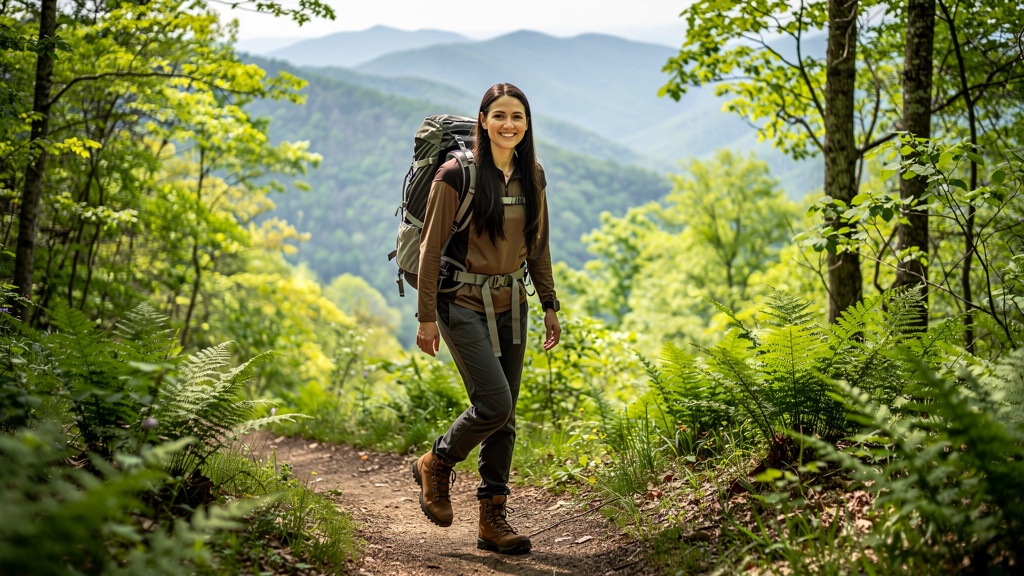
Young woman with dark hair hiking the Appalachian Trail in Virginia, wearing backpack in lush green forest
Kayakers navigating whitewater rapids on the New River in Virginia with forested canyon walls
Water Adventures

Whitewater Kayaking & Water Sports in Virginia

Virginia's rivers offer extraordinary opportunities for paddlers of every skill level, from the gentle flatwater floats of the Shenandoah River through the challenging Class IV whitewater of the James River Gorge in downtown Richmond to the technical Class V rapids of the New River Gorge in the Allegheny Highlands. The state's rivers flow through landscapes of remarkable beauty — limestone-walled canyons, old-growth river bottomland forest, ancient Appalachian ridgelines — making water-based exploration one of the finest ways to experience Virginia's natural grandeur.

The New River — one of the oldest rivers in the world, estimated to be 320 to 360 million years old by geologists, and one of only a handful of rivers on Earth that flows northward — offers outstanding paddling across its Virginia sections. The upper New River in Grayson and Carroll counties provides gentle flatwater suitable for canoes and recreational kayaks, with outstanding scenery and frequent wildlife sightings. As the river enters the New River Gorge downstream of Fries and Galax, the gradient increases dramatically, producing the technical whitewater that has made the New River one of the premier paddling destinations in the eastern United States. The gorge section features Class III–IV rapids interspersed with quiet pools, dramatic basalt canyon walls, and a sense of wilderness that is remarkable given the river's proximity to major population centers.

The James River in Richmond offers one of the most unusual urban paddling experiences in North America — Class III and IV rapids running through the heart of a state capital city, flanked by riverside parks, urban beaches, and the skyline of a major American city. The James River Park System, which manages the river corridor through Richmond, is one of the finest urban parks in the United States and provides kayak and canoe launch points, hiking and cycling trails along the river corridor, and supervised swimming areas at Pony Pasture and Reedy Creek. The Richmond Whitewater Experience offers guided kayak and raft trips on the James for visitors of all skill levels.

For sea kayakers, Virginia's Eastern Shore and the barrier islands of the Virginia Coast Reserve offer some of the most extraordinary paddling on the East Coast. The 14 undeveloped barrier islands managed by The Nature Conservancy as the Virginia Coast Reserve form a 75-mile coastal wilderness of salt marshes, tidal creeks, and uninhabited beaches accessible only by boat — a paddling paradise of exceptional ecological richness and solitary beauty. Guided sea kayak tours of the barrier islands are available through several outfitters in Exmore and Cape Charles on the Eastern Shore.

  • New River Gorge — Class III–IV whitewater in an ancient geological canyon
  • James River in Richmond — urban whitewater unlike any city in the world
  • Eastern Shore barrier islands — pristine sea kayaking wilderness accessible only by water
  • Shenandoah River — gentle flatwater tubing and canoe floats through classic Virginia farmland

Assateague Island & the Famous Wild Ponies

The wild ponies of Assateague Island are one of Virginia's most magical and beloved natural attractions — small, sturdy, salt-wind tousled horses that roam freely across the barrier island's beach, dune, and salt marsh habitats with a serene independence that never fails to astonish visitors encountering them for the first time. The origin of the ponies is the subject of romantic legend: one story holds that they are the descendants of horses that swam ashore from a Spanish galleon wrecked on the barrier island in the 16th or 17th century. The more prosaic historical explanation suggests they were likely placed on the island by mainland farmers in the colonial era to avoid livestock taxes, but the galleon story persists and is perhaps more suitable to the extraordinary nature of the animals themselves.

The Chincoteague ponies — as the Virginia herd is known, to distinguish them from the Maryland herd on the northern portion of the island — are managed by the Chincoteague Volunteer Fire Company, which has conducted an annual pony swim and auction since 1925 to keep herd numbers manageable and to raise funds for the fire company. Each July, the Pony Swim draws tens of thousands of visitors to watch the ponies swim from Assateague to Chincoteague across the narrow Assateague Channel, followed by the Pony Penning auction where young ponies are sold. This event, immortalized in Marguerite Henry's beloved 1947 children's novel Misty of Chincoteague, is one of the most uniquely American wildlife spectacles that exists anywhere in the country.

The Chincoteague National Wildlife Refuge, which covers much of the Virginia portion of Assateague Island, is accessible by car from Chincoteague Island via the causeway. A 3.5-mile Wildlife Loop offers the best opportunities for pony viewing throughout the year, and the refuge's pristine beach is open for swimming, sunbathing, shelling, and surf fishing. The refuge is also outstanding for bird watching — over 320 species have been recorded, including large numbers of shorebirds and wading birds during migration, nesting ospreys and piping plovers in summer, and spectacular concentrations of snow geese and tundra swans in winter.

🐴 Pony Viewing Tips

Ponies can be observed year-round on Assateague Island, but are most easily spotted on the Wildlife Loop in early morning and late afternoon. Never approach or feed the ponies — they are wild animals that can kick and bite, and feeding them human food is harmful to their health and prohibited by federal law. The annual Pony Swim typically occurs on the last Wednesday and Thursday of July and draws enormous crowds — book accommodation on Chincoteague Island many months in advance for this event.

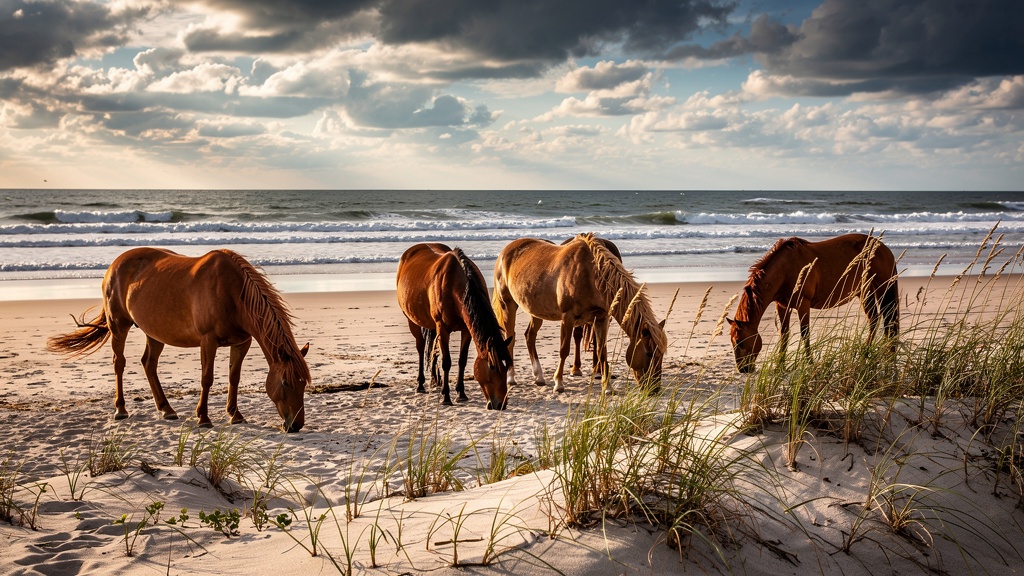
Wild ponies of Assateague Island grazing on the beach beside the Atlantic Ocean with dramatic coastal sky

Virginia's Exceptional State Parks

Virginia's 36 state parks offer some of the finest publicly accessible natural and recreational lands in the eastern United States, spanning beach, mountain, forest, piedmont, and river environments at very affordable entry prices.

🏔️ Grayson Highlands State Park

In southwestern Virginia's Jefferson National Forest, Grayson Highlands is Virginia's highest state park, with trails extending to 5,000+ feet elevation on Mount Rogers, the state's highest peak. The park's famous wild ponies graze the open balds, creating one of the most photogenic landscapes in the entire state. The Appalachian Trail passes through the park, offering multi-day backpacking access to some of the most remote and beautiful terrain in Virginia. The annual Grayson Highlands Fall Festival each September brings bluegrass and old-time music to the mountain meadows in a setting of breathtaking natural beauty.

🌊 First Landing State Park

First Landing State Park at the northern end of Virginia Beach marks the spot where the Jamestown colonists first made landfall in April 1607, 13 days before sailing north to establish their permanent settlement. The park preserves a remarkable maritime forest of bald cypress, live oak, and Spanish moss — a vegetation type more typical of the Carolina lowcountry than of Virginia — and offers 1.5 miles of Chesapeake Bay beach, 20 miles of hiking trails through diverse coastal habitats, kayak and canoe launch facilities, and an excellent campground. The juxtaposition of this tranquil wilderness with the Virginia Beach resort district immediately to the south is one of the most striking contrasts in Virginia outdoor recreation.

💎 Douthat State Park

Douthat State Park in Bath County, established in the 1930s by the Civilian Conservation Corps and one of the six original Virginia state parks, is widely considered one of the finest traditional mountain park experiences in the eastern United States. The park's 40-acre lake offers swimming, fishing, paddle boating, and canoe rental in a spectacularly beautiful mountain setting. More than 40 miles of hiking trails wind through the surrounding mountain terrain, including several routes to outstanding summit viewpoints. The park's CCC-built cabins and lodge, maintained with their original rustic charm, provide one of Virginia's most atmospheric accommodation options and are booked months in advance during peak season.

🦅 Chippokes State Park

On the south bank of the James River opposite Jamestown, Chippokes State Park preserves one of the oldest continuously farmed plantations in the United States — the Chippokes Plantation, in operation since 1617. The park combines 1,683 acres of James River shoreline, mature forest, and actively farmed fields with a Victorian mansion, farm museum, swimming pool, equestrian trails, and 25 miles of hiking and biking paths. The Farm and Forestry Museum at Chippokes is one of the most comprehensive collections of antique farm equipment in Virginia, tracing four centuries of agricultural technology in the Commonwealth. The park's Colonial Revival mansion, available for special event rental, offers extraordinary views over the James River to the Jamestown historic area.

More Outdoor Adventures — Cycling, Wildlife & Snow Sports

🚲 Virginia Creeper Trail

The Virginia Creeper Trail is one of the most popular and celebrated rail-trails in the United States — a 34-mile converted railroad corridor that winds through the Appalachian Highlands of southwestern Virginia from Abingdon to the North Carolina border at Whitetop, passing through the town of Damascus (the "Trail Town USA" and intersection point of the Appalachian Trail, TransAmerica Bicycle Trail, and Iron Mountain Trail) along the way. The trail derives its name from the old Virginia-Carolina Railroad whose slow trains were nicknamed the "Virginia Creeper" by locals. The route climbs gently through spectacular mountain scenery, crossing the Whitetop Laurel Creek on 47 historic wooden trestle bridges, passing through tunnels cut through the mountain rock, and traversing landscapes of exceptional beauty. Shuttle services from Abingdon allow cyclists to ride the most spectacular downhill section from Whitetop Station to Damascus with minimal climbing.

🦌 Wildlife Watching in Virginia

Virginia's geographic position — at the intersection of the northern and southern ranges of many North American species, at the Atlantic Flyway concentration of migratory birds, and within one of the continent's most biologically diverse temperate ecosystems — makes it an outstanding destination for wildlife watching throughout the year. Shenandoah National Park is the best place in the state for black bear observation — the park estimates its bear population at 400–600 individuals, and patient early-morning watchers at Big Meadows regularly see multiple bears in a single outing. White-tailed deer are abundant throughout the state. The Eastern Shore's Chincoteague National Wildlife Refuge and the Virginia Coast Reserve barrier islands offer world-class shorebird observation during spring and fall migration — concentrations of tens of thousands of birds filling the sky are not uncommon during peak migration events.

⛷️ Skiing & Snow Sports

Virginia is not typically considered a ski destination on the level of Vermont or Colorado, but the state's two major ski resorts offer enjoyable skiing in a distinctively Southern mountain atmosphere and are easily accessible to the tens of millions of people in the Washington D.C., Richmond, and Hampton Roads metropolitan areas. Wintergreen Resort in Nelson County, on the eastern slope of the Blue Ridge Mountains near Charlottesville, offers 26 slopes and trails, the highest vertical drop in Virginia at 1,003 feet, and outstanding mountain lodge facilities. Massanutten Resort in the Shenandoah Valley offers 14 slopes and trails with comprehensive snowmaking, a waterpark open year-round, and excellent family resort amenities. Both resorts typically operate from late December through mid-March, depending on snowfall and temperature conditions.

🎣 World-Class Fishing

Virginia's diverse aquatic environments — from the clear mountain trout streams of the Blue Ridge to the brackish waters of the Chesapeake's tributaries and the offshore Atlantic fishing grounds — support some of the finest fishing in the eastern United States. The Rapidan River and its headwaters in Shenandoah National Park are legendary among fly fishers for their populations of native brook trout — the only salmonid native to Virginia and a fish of exquisite beauty that thrives in the cold, clear, highly oxygenated waters of the Blue Ridge streams. Presidents from Hoover to Obama have fished the Rapidan. The Virginia Department of Wildlife Resources manages an extensive network of stocked trout waters throughout the state, and the saltwater fishing off Virginia Beach — for striped bass, red drum, cobia, and flounder inshore, and for marlin, yellowfin tuna, and mahi-mahi offshore — is among the finest on the East Coast.

The Blue Ridge Parkway — America's Favorite Drive

No account of Virginia's outdoor adventures would be complete without a tribute to the Blue Ridge Parkway, which the National Park Service consistently identifies as the most visited unit in the entire National Park System. The Parkway — 469 miles of two-lane road linking Shenandoah National Park's Skyline Drive in the north to the Great Smoky Mountains National Park in the south, built between 1935 and 1987 — passes through Virginia's portion of the Blue Ridge Mountains for approximately 217 miles between Waynesboro and the North Carolina border near Cumberland Knob.

The Parkway was designed from the beginning as a scenic pleasure road rather than a transportation corridor — speed limits are strictly enforced at 45 mph maximum, there are no commercial vehicles, and the entire route is engineered to maximize the traveler's experience of the mountain landscape while minimizing visual intrusion from the industrial and commercial world beyond. Every bridge, tunnel, overlook, and landscaping feature was designed to harmonize with the natural landscape, and the result is a 469-mile work of landscape architecture that remains as extraordinary today as when it opened nearly 90 years ago.

The Virginia section of the Parkway includes some of its finest highlights. Mabry Mill near Meadows of Dan — a restored 19th-century water-powered gristmill reflected in a millpond surrounded by wildflowers — is the most photographed scene on the entire Parkway and one of the most iconic images in American outdoor photography. The Rocky Knob section near Woolwine offers outstanding backcountry camping and hiking through open meadow and rocky ridgeline terrain. The Peaks of Otter — three prominent mountains near Bedford that include the iconic Abbott Lake view of Sharp Top Mountain — are among the most beloved landscapes in the entire state. The Parkway visitor centers at Peaks of Otter and Mabry Mill provide excellent interpretive materials and comfortable stopping points along the drive.

"The Blue Ridge Parkway is not merely a road. It is a museum of American landscape, a testament to what a civilization can choose to preserve when it decides that beauty is worth more than speed."